
The arrival of a new companion is like introducing a precious work of art into your home: it stirs vivid emotion and transforms the atmosphere of the place. With its round, plush-like silhouette, big curious eyes, and polite reserve, the British Shorthair kitten brings a reassuring presence from the moment it steps through the door. To ensure this meeting takes place in the most perfect tranquility, meticulous preparation of your home is essential. Let's discover together how to arrange the space, gather the essential supplies, and successfully settle in your little feline.
Preparing the space: designing a haven of peace
Before the official day of the big departure, your home must be thought of as a warm cocoon, both protective and reassuring for an animal discovering an unfamiliar environment.

The arrival sanctuary: the refuge room
To welcome a British Shorthair kitten without causing unnecessary stress, reserve a quiet room for its arrival (a guest room or a closed office). This dedicated space will allow it to get its visual and olfactory bearings at its own pace, without feeling overwhelmed by the vastness of the home. Set up all its essential belongings there: its bedding, litter box, food bowls, and a few toys.
Secure the premises rigorously
The natural curiosity of a young cat requires anticipating household dangers:
Openings: make sure to secure balconies, tilt-and-turn windows, and terraces with appropriate nets.
Fragile items: put away your sculptures, delicate vases, or valuable trinkets while the kitten gains its balance.
Indoor plants: keep toxic plants away (such as lilies, ficus, monsteras, or philodendrons).
Electrical cables: hide or bundle wires on the floor using protective conduits.
The list of essentials for its arrival
Material comfort ensures a serene anchor in your daily life. Choose durable, aesthetic, and stable materials.
Furniture and rest
Although small at two or three months, the British Shorthair will become a dense and heavy cat. Choose immediately:
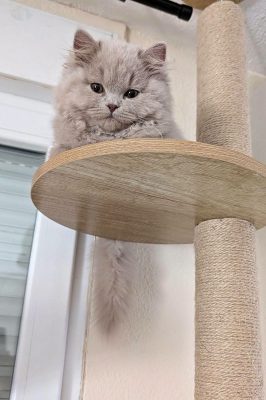
A sturdy cat tree: get a model with a thick, stable base, equipped with sisal trunks of generous diameter to withstand the attacks of a future feline weighing five to six kilos.
A cozy bed: place a basket with padded edges in an area sheltered from drafts.
A vertical or inclined scratching post: essential from day one to protect your sofas and woodwork.
Food, water, and hygiene
The kitten's digestive sensitivity requires preserving its habits:
Transitional food: get the same kibble and wet food as those provided by the breeder to avoid intestinal issues during the first two weeks.
The bowls: choose wide, shallow containers made of ceramic or glass, which do not irritate the whiskers and do not retain odors.
The water fountain: moving water stimulates hydration, essential for preventing urinary issues.
The litter box: prefer an open box with low edges to make it easy for the kitten to access, filled with unscented litter.

The kitten's first days: taming the novelty
Patience and gentleness are the keys to a successful acclimatization. The transition from the cattery to a new environment represents a true sensory upheaval.
The big day: a gentle welcome
As soon as you arrive home, place the carrier on the floor in the safe room. Open the door without forcing the animal to come out. Let it sniff the air and venture out on its own. Speak to it in a calm, low voice, without sudden movements or excited cries.
Calmly show it the location of its litter box by gently placing it inside after its initial exploration.
Making the kitten's first days with the family a success
During the kitten's first days, establish a predictable and soothing environment:
Respect its retreat: if it chooses to hide under a piece of furniture, do not pull it out by force. Sit nearby, read a book, or go about your activities calmly so it gets used to your presence.
Guide the children: explain to the youngest that a kitten is not a toy and that it should never be disturbed when it is sleeping or eating.
The progressive opening of the territory: once the kitten confidently explores its refuge room, open the door to let it discover the rest of the apartment step by step, room after room.
Welcoming this little aristocrat with silky fur brings a new harmony to your home. By offering it a secure environment and stable landmarks, you lay the foundations for a close and serene cohabitation for the next fifteen years.