
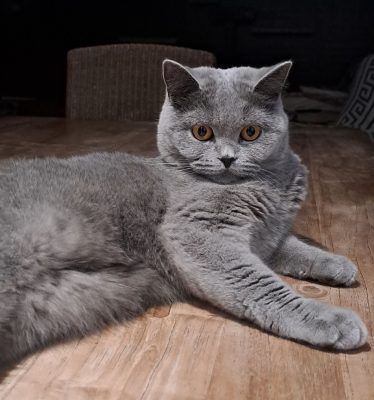
The British Shorthair, with its robust teddy bear and its placid temperament, is a breed of cats very popular with families. Generally endowed with a good constitution, it enjoys an honorable life expectancy, up to 15 to 16 years, or even more, with attentive care and a good lifestyle. However, like all breeds, the British Shorthair is predisposed to certain conditions, which is essential to have knowledge to ensure its well-being and anticipate possible health concerns. A preventive approach, combined with a careful observation of his animal, is the key to offering him a long and happy life.
Predominant hereditary and genetic diseases
Although robust, the British Shorthair is not immune to diseases of genetic origin. Serious breeders play a crucial role in testing screening tests on their breeders to limit the transmission of these tares.
Hypertrophic cardiomyopathy (CMH)
It is the most common heart disease in cats, and the British shorthair is particularly sensitive. The CMH is characterized by an abnormal thickening of the muscle walls of the heart, in particular the left ventricle. This thickening reduces the capacity of the heart to fill up properly and effectively pump blood. Over time, this can cause arrhythmia, congestive heart failure, even the formation of blood clots.
Screening and prevention
There is no curative treatment, but an early diagnosis via a regular echocardiography (often annual in breeders and recommended for animals at risk) makes it possible to set up support treatment to slow down progression and improve quality of life. Diet enriched with nutrients such as taurine, L-Carnitine and EPA-DHA fatty acids can help support heart function. It is imperative to choose a kitten resulting from a negative tested lines for the CMH.
Renal polycystosis (PKD)
This hereditary disease is also a major concern in the British Shorthair, partly due to crosses spent with Persian, a carrier of the gene. The PKD manifests itself by the progressive development of cysts filled with liquid in the kidneys. These cysts, growing and multiplying, compress and destroy the healthy renal tissue, leading to chronic renal failure.
Screening and prevention
A simple and reliable DNA test can detect the gene responsible for the PKD. Responsible breeders systematically test their breeders and discard the carriers of the breeding program. Always demand the results of parents' tests before adopting a kitten. A quality diet, promoting urinary health, is also recommended.

Hemophilia B
Although less frequently cited, hemophilia B, a hereditary blood coagulation disorder, has been identified in the British Shorthair. This can lead to excessive bleeding following minor injuries or surgical interventions. Screening can be envisaged for breeders.
Other current health problems
Beyond major genetic diseases, other conditions can affect British Shorthair:
Obesity
With its sometimes greedy appetite and its rather calm nature, especially if it lives exclusively indoors and lacks exercise, the British Shorthair has a strong trend in the overweight and obesity. Overweight is a risk factor for many other health problems, including diabetes, joint disorders and heart disease.
Prevention: high quality diet, rich in protein and moderate in fat and carbohydrates, is crucial. The portions must be controlled and adapted to its activity level. Offering food in distributor toys can encourage it to move. Daily play sessions are essential to maintain a shape weight.
Dental problems
Tartar formation is frequent and can lead to gingivitis (inflammation of the gums) if it is not taken care of. British shorthairs sometimes tend to swallow their food without chewing it enough, which can promote dental problems.
Prevention: regular brushing of teeth (1 to 2 times a week) is ideal. Adapted size and texture kibbles, encouraging chewing, can help. Control visits to the veterinarian will include a dental exam and, if necessary, professional descaling.
Joint and bone disorders
Due to its strong corpulence and its robust framework, the British shorthair can be subject to joint problems such as hip dysplasia. This malformation of the joint can cause pain, lameness and early osteoarthritis.
Prevention: maintaining an optimal weight is fundamental to reducing the pressure on the joints. A food supporting joint health can be beneficial. Moderate and regular exercise helps maintain good muscle mass.
Diabetes mellitus
Often a consequence of obesity, diabetes is characterized by chronic hyperglycemia due to a lack of production or use of insulin.
Prevention and management: prevention comes above all through the maintenance of a healthy weight. If diabetes is diagnosed, treatment (often daily insulin injections) and a strict diet are necessary, involving significant financial cost and commitment.
Dermatological and parasitic problems
Its dense and short coat, although easy to maintain, can house external parasites such as fleas or ticks, especially if it has access to the outside. Food or environmental allergies can also occur, manifested by itching and skin lesions.
Prevention: regular and suitable antiparasitic treatment is essential. In case of suspicion of allergy, a veterinary consultation will identify the cause and set up suitable management.
Eye problems
Conditions such as the progressive atrophy of the retina (APR) or dislocation of the lens have been reported, although less frequently. Sweet eyes cleaning with suitable products may be necessary if secretions accumulate.
Prevention: the key approach for a British shorthair in great shape
The best strategy to guarantee a long healthy life to your British Shorthair is based on a proactive and preventive approach.
Choose a responsible breeder
This is the first crucial step. A conscientious breeder will perform genetic tests for the CMH and PKD on its breeders and will provide you with the results. He will ensure the good socialization of kittens and their initial health. Do not hesitate to request a written sanitary guarantee.
Rigorous veterinary follow -up
Annual visits to the veterinarian are essential, even for a cat that seems in perfect health. These visits allow a complete physical examination, the update of vaccines (against typhus, coryza, feline leukosis, and rabies if necessary), the administration of deworming and antiparasitic treatments. For older cats, semi -annual balance sheets can be recommended. The veterinarian will also be able to offer screening tests (blood tests, echocardiography) depending on the age and risk factors of your cat.
Quality and adapted food
Opt for a premium diet, rich in good quality animal proteins, and adapted to its age, its status (sterilized or not) and its level of activity. Carefully monitor the quantities to avoid overweight. Fresh water must always be available.
Regular exercise and stimulation
Even if the British Shorthair is calm in nature, he needs exercise to maintain his physical and mental condition. Daily interactive game sessions, stimulating toys, and an enriched environment (cat tree, height observation stations) are important.
Hygiene and regular care
Brushing: weekly brushing is generally enough for its short coat, to intensify daily during the moult to eliminate dead hairs and prevent the formation of hair balls.
Dental care: Brushing of teeth is the most effective.
Cleaning the eyes and ears: if necessary, use suitable solutions for cats and clean compresses. Avoid cleaning unnecessarily.
Litter: Maintaining an impeccably clean litter is essential for its comfort and to prevent the problems of malprople.
Scratches: A good scratch generally allows your cat to use its claws naturally. A cut may be necessary occasionally.
Attentive monitoring of alert signs: be careful with any change in the behavior or appearance of your cat: loss of appetite or unexplained weight, frequent vomiting or diarrhea, breathing difficulties, coughs, lethargy, lameterie, increase in thirst or mictions, changes in cleanliness habits. These signs must motivate a quick veterinary consultation.
In conclusion, if the British Shorthair is predisposed to certain pathologies, an knowledge of these risks, coupled with active prevention measures throughout his life - ranging from the judicious choice of the breeder to daily care, through regular veterinary follow -up and an adapted diet - makes it possible to minimize these risks and offer this magnificent companion a healthy and fulfilled existence. His well-being depends greatly on the attention and care that you will provide to him.